Tile Guide
Porcelain vs Ceramic Tiles: What’s the Difference and Which Should You Choose?

Quick answer
Porcelain and ceramic tiles are both part of the broader ceramic tile family, but they are not identical. The main technical difference is water absorption. Under the commonly used ASTM C373 classification, porcelain tile has a water absorption of 0.5% or less.
For a homeowner or project manager, however, choosing between tiles should not come down to the word "porcelain" alone. You should also consider the room, expected traffic, tile size, surface finish, installation conditions, maintenance requirements, design and the manufacturer's specifications.
For many residential and commercial projects, porcelain is a practical choice because of its low water absorption and wide range of finishes and formats. But the right tile is ultimately the one whose specifications and intended application match the space.
What is porcelain tile?
Porcelain tile is a type of ceramic tile made from carefully selected raw materials and manufactured under conditions that produce a dense tile with very low water absorption.
The 0.5% water absorption threshold is important because it gives porcelain a defined technical classification. It does not mean that every porcelain tile is automatically suitable for every application.
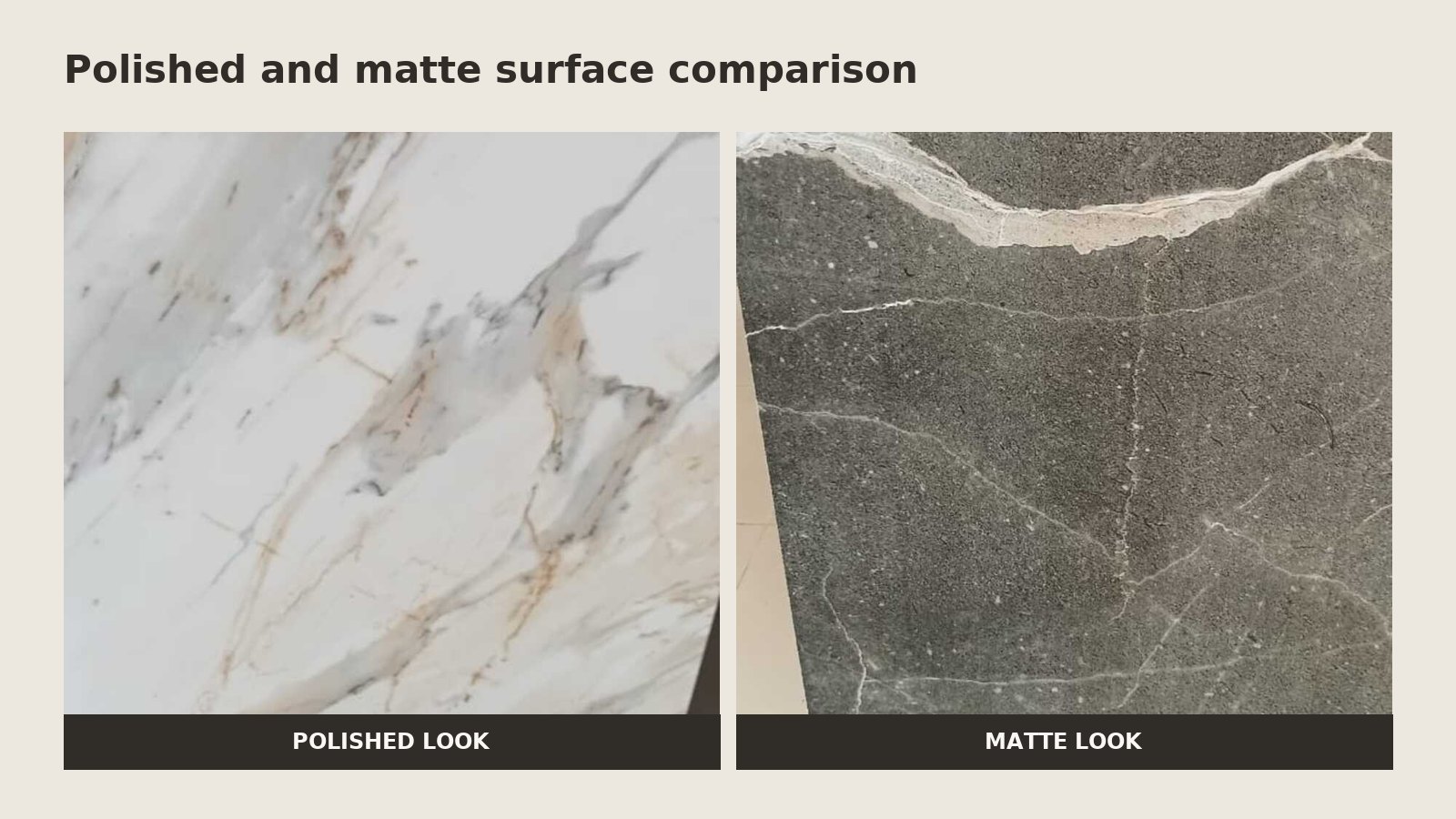
For example, two porcelain tiles can have different surface finishes, dimensions, textures and installation requirements. A tile selected for a living room may have a very different design or surface specification from one intended for another environment.
What is ceramic tile?
Ceramic tile is a broad category of tile made from clay and other mineral materials and then fired.
This is where some of the confusion comes from: porcelain is itself a type of ceramic tile. So it is not technically accurate to treat "ceramic" and "porcelain" as completely separate families.
Instead, think of it this way:
Ceramic tile is the wider category. Porcelain is a specific category within it, defined by technical characteristics including very low water absorption.
Non-porcelain ceramic tiles can have different levels of water absorption and different performance characteristics. Their suitability depends on the product and application.
Porcelain vs ceramic: the main differences
| Factor | Porcelain tile | Other ceramic tile |
|---|---|---|
| Technical classification | Water absorption of 0.5% or less under ASTM C373 | Generally above the porcelain threshold, depending on the product |
| Relationship | A type of ceramic tile | Part of the broader ceramic category |
| Water absorption | Very low | Varies |
| Design options | Wide range of colours, patterns, textures and finishes | Wide range, depending on product |
| Installation | Requires appropriate tools, substrate preparation and installation method | Also requires correct substrate and installation method |
| Best choice | Depends on the specific application and product specification | Depends on the specific application and product specification |
The biggest mistake is to stop at the material name. A good tile decision considers the whole product specification.
Why water absorption matters
Water absorption describes how much water a tile can absorb under a defined test.
Low water absorption can be useful in situations where exposure to moisture is an important consideration. This is one reason porcelain is widely used in many residential and commercial applications.
However, low water absorption does not mean you can ignore installation.
The substrate, adhesive, grout, movement joints, waterproofing where required, tile format, and installation method all affect the finished result.
Is porcelain stronger than ceramic?
You will often hear that porcelain is "stronger" than ceramic. That statement is too broad on its own.
Tile performance depends on the specific product and the relevant technical properties. Porcelain's low water absorption is a defining characteristic, but you should not use the word porcelain as a substitute for checking a product's actual specification.
If you are selecting tiles for a high-traffic commercial project, for example, ask for the technical information relevant to the intended application rather than choosing solely because a tile is labelled porcelain.
Which should you choose for a Nigerian home?
Start with the space, not the tile name.
Living rooms
Think about the visual style you want, the amount of traffic, cleaning requirements, tile format, and how the tile will work with furniture and lighting.
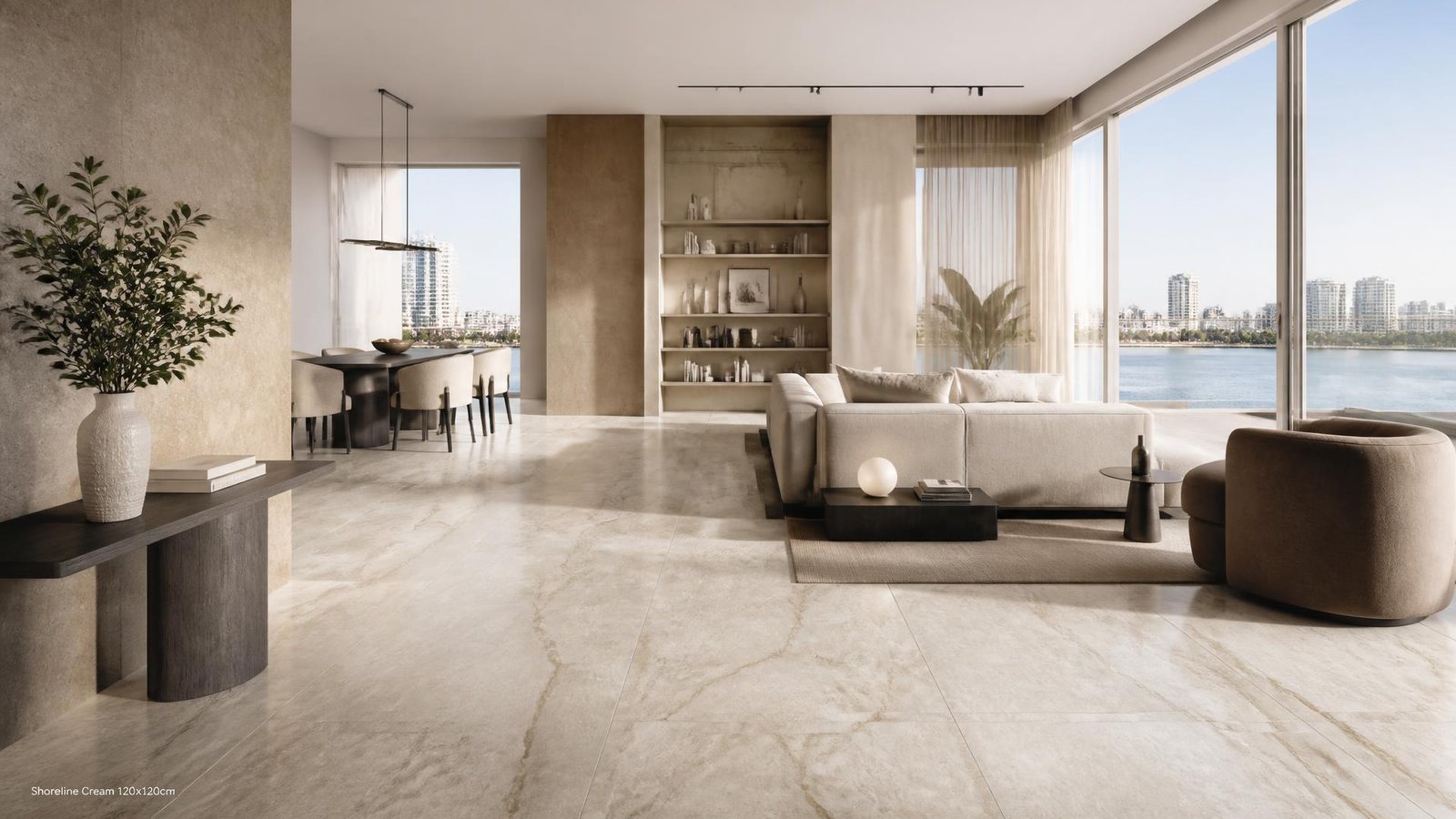
Large-format porcelain tiles can create a more continuous visual effect because there are fewer grout lines, while smaller formats can create more defined patterns.
Bedrooms
Comfort, appearance and ease of cleaning often become bigger considerations. Marble-look, wood-look, concrete-look and plain tiles can all create very different moods.
Kitchens
Look at moisture exposure, cleaning requirements, surface characteristics and the specific manufacturer's recommendations.
Bathrooms
Do not choose solely based on appearance. Consider the product's intended application and slip-related characteristics, particularly for floors that may become wet.
Outdoor areas
Outdoor projects require additional consideration of weather exposure, installation conditions, surface characteristics and the manufacturer's suitability recommendations.
How to choose tiles without making an expensive mistake
Before buying, ask these questions:
What space is the tile going into?
Is it for a floor, wall or both?
What level of traffic will it receive?
Will it regularly be exposed to water?
What finish does the product have?
What size works with the room dimensions?
How will the tile be installed?
What maintenance will it require?
How much material is needed, including a reasonable allowance for cuts and breakage?
What does the product specification say about its intended application?
If you are buying for a large project, also confirm that the quantity you need is available from the same product batch or approved production run where consistency matters.
Where Glizers fits in
Glizers is an authorised distributor of CDK Premium Porcelain Tiles, with collections covering different visual styles and formats.
The current Glizers catalogue includes Marble Look, Wood Look, Concrete & Stone Look, Uni, Multi Pattern and Décor collections, with multiple sizes and finishes.
That means the conversation does not have to be "porcelain or ceramic?" alone. It can be about finding the right porcelain tile, format and finish for the actual project.
Explore Marble Look tiles and Wood Look tiles in the Glizers collections.
Frequently asked questions
Is porcelain tile a type of ceramic tile?
Yes. Porcelain is a specific type of ceramic tile.
Is porcelain better than ceramic?
Not automatically. The appropriate choice depends on the product specifications and where the tile will be used.
Is porcelain good for Nigerian homes?
Porcelain is used across many residential and commercial applications in Nigeria. The correct product should still be selected according to the room, application, installation requirements, and manufacturer's specifications.
Does porcelain tile absorb water?
Porcelain tile has a water absorption of 0.5% or less under the ASTM C373 classification.
How do I choose the right porcelain tile?
Start with the intended application, then consider size, finish, design, traffic, maintenance, installation and the product's technical specifications.
Final thoughts
The best tile decision is not simply about choosing the material that sounds more premium. It is about matching the right product to the right space.
Understand the technical difference, look at the room, consider how the space will be used, and ask for the product information you need before buying.
CTA: Not sure which tile is right for your project? Send us your measurements, project details, and location on WhatsApp, and our team will help you narrow down the options or simply request a quote.
Need help choosing the right tiles for your project?
Tell us what you're working on, what you need and where your project is located. Our team can help you explore suitable tile options for your project.