Project Guide
How to Choose Tiles for a New House in Nigeria

Quick answer
When choosing tiles for a new house in Nigeria, do not start by picking colours from a catalogue. Start with a tile plan.
List each space, determine whether the tile is for the floor or wall, consider traffic and moisture, decide on the visual direction, select formats and finishes, calculate quantities and confirm product availability before ordering.
This approach can prevent expensive changes later in the project.
1. Create a tile schedule before shopping
A tile schedule is simply a list of where each tile will be used.
For example:
| Area | Floor/Wall | Preferred style | Size | Finish |
|---|---|---|---|---|
| Living room | Floor | Marble/stone | 600×1200 | To be selected |
| Bedrooms | Floor | Wood/plain | 600×600 or suitable format | To be selected |
| Kitchen | Floor/wall | Plain/stone | Suitable format | To be selected |
| Bathrooms | Floor/wall | Coordinated | Suitable format | To be selected |
| Exterior | Floor | Stone | Outdoor-suitable product | To be selected |
The exact choices depend on your architectural and interior design plan.
2. Decide on your overall style
A new house is easier to coordinate when you establish a visual direction early.
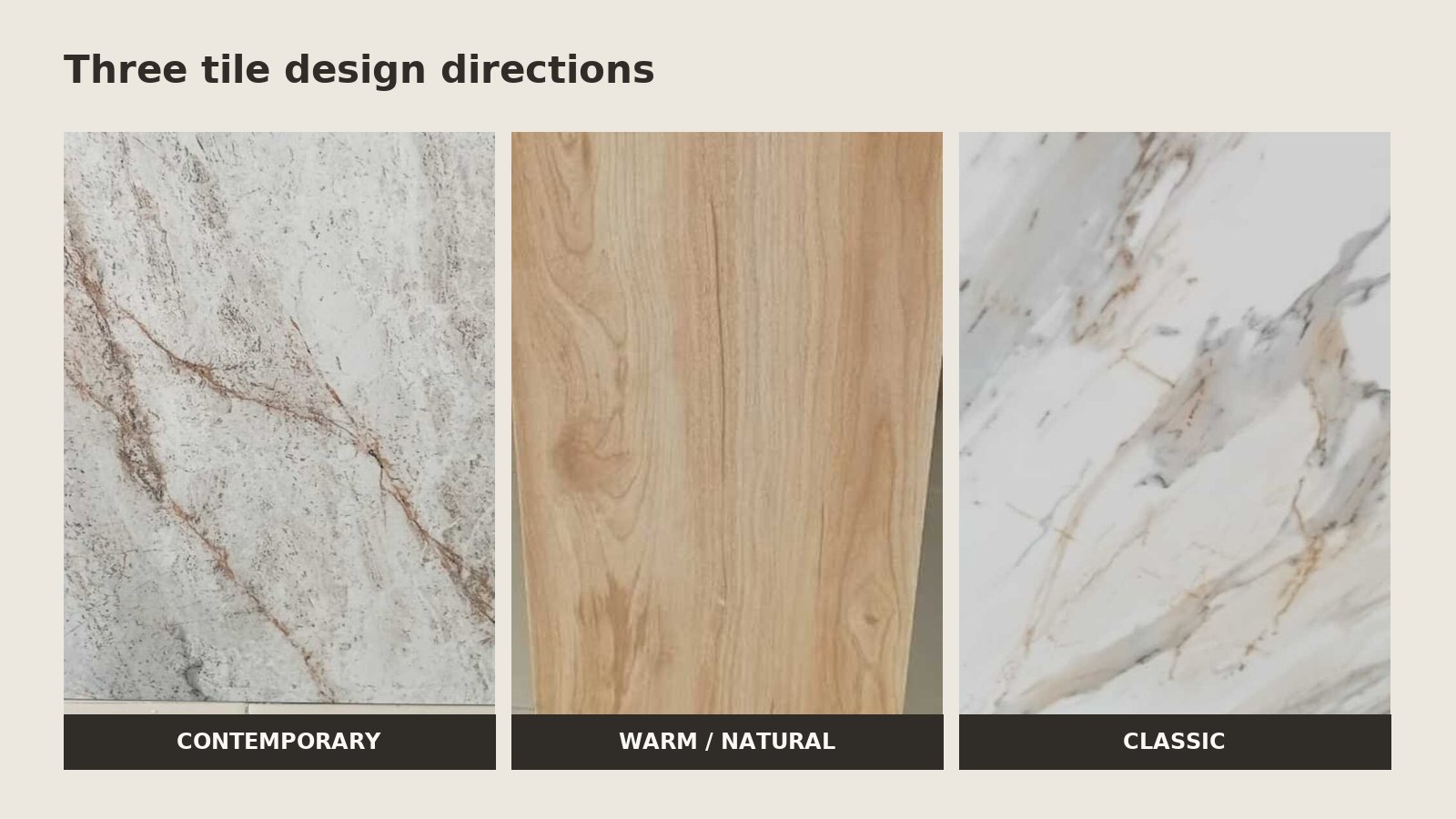
Some common directions include:
Contemporary
Clean lines, neutral tones, concrete-inspired surfaces and large formats.
Warm and natural
Wood-look tiles, warm neutrals and stone-inspired surfaces.
Classic and luxurious
Marble-look surfaces, refined finishes and coordinated neutral colours.
Minimalist
Plain surfaces, restrained colours and simple transitions between spaces.
You do not have to use one collection throughout the entire house. The goal is to make the combinations intentional.
3. Choose floor tiles based on the actual space
A tile that works beautifully in a bedroom may not be the right choice for an outdoor area.
For every floor, consider:
Expected foot traffic
Moisture exposure
Surface characteristics
Cleaning requirements
Tile size
Installation conditions
Manufacturer's application recommendations
For areas with specific safety or performance requirements, request the technical information before purchase.
4. Think about tile size early
Tile size affects both design and installation.
Glizers currently offers formats including:
300×600 mm
400×800 mm
600×600 mm
600×900 mm
600×1200 mm
300×1200 mm
Not every size is available in every collection.
A larger format can reduce the number of visible grout lines, while smaller formats can provide more flexibility around complex layouts.
5. Do not select tiles before considering your doors and built-ins
This sounds minor, but it can affect the final result.
Your tile layout interacts with:
Door openings
Kitchen cabinets
Bathroom fixtures
Staircases
Columns
Built-in wardrobes
Floor transitions
For a new build, involve the architect, interior designer or contractor in tile layout discussions before installation begins.
6. Buy with the project timeline in mind
One of the biggest practical issues with a construction project is assuming that a tile will always be available.
If the tile is critical to the project, confirm:
Current stock
Quantity available
Expected restock timeline
Batch consistency where relevant
Delivery arrangements
Whether you can obtain enough quantity for the full project
This matters even more for large developments.
7. Calculate quantity properly
Measure each area rather than estimating from memory.
For a simple rectangular room:
Area = length × width
Then calculate the tile coverage.
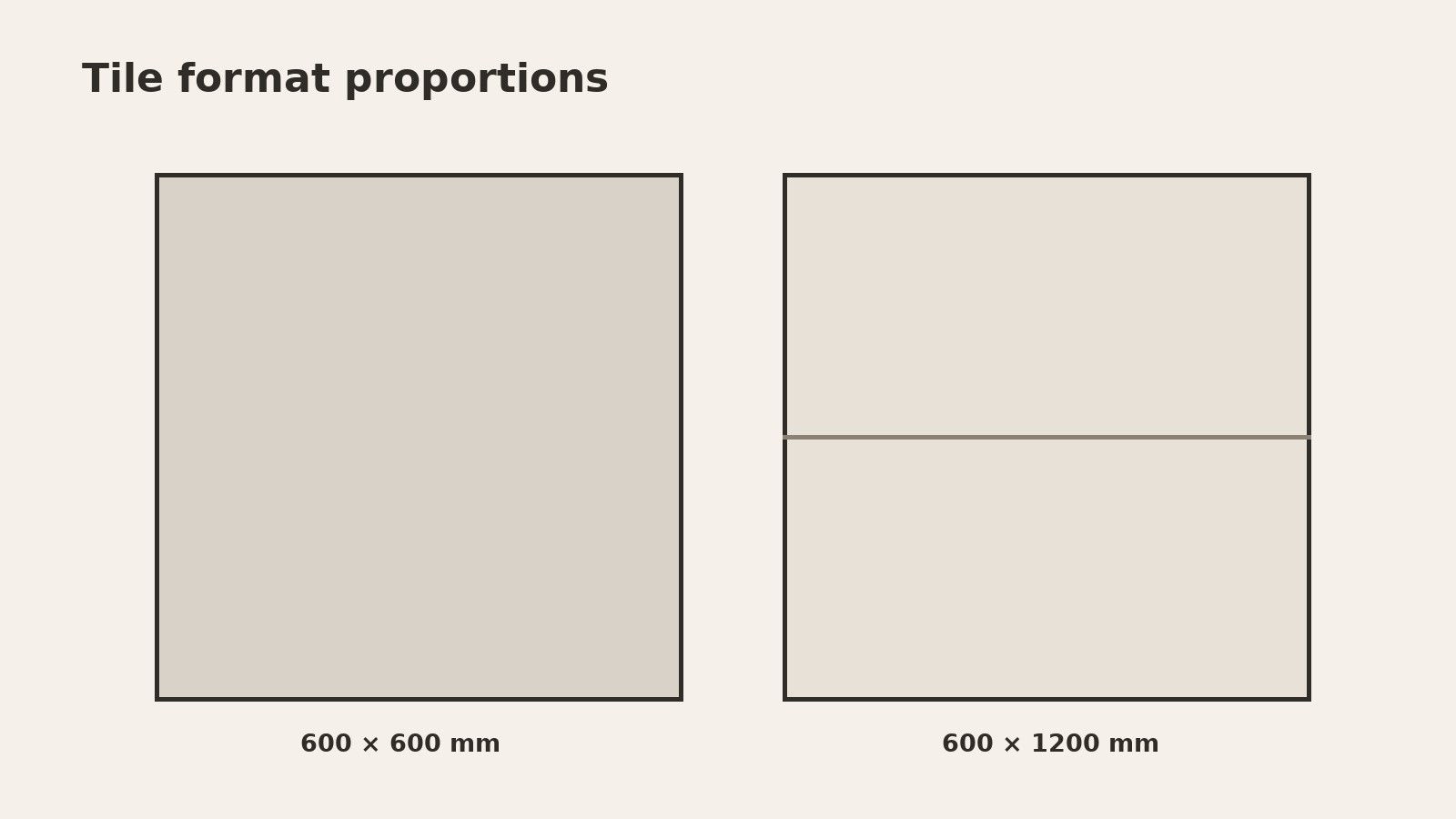
For a 600×600 mm tile:
0.6 × 0.6 = 0.36 m² per tile
For a 600×1200 mm tile:
0.6 × 1.2 = 0.72 m² per tile
Then divide the area by the coverage per tile and add a reasonable allowance for cuts, breakage, and future replacements.
Use our guide to calculate how many tiles you need.
8. Consider maintenance before choosing a dramatic tile
Ask how the surface will look after months of everyday life.
A tile can be beautiful but may not fit your maintenance preferences.
Consider:
Cleaning routine
Grout colour
Surface texture
Visibility of dust and marks
Cleaning products recommended by the manufacturer
The goal is not to choose the tile that requires the least maintenance in every situation. It is to choose a tile whose maintenance requirements fit your lifestyle.
9. If you are managing a project from abroad
For Nigerians managing construction remotely, tile purchasing can be especially stressful.
You may not be physically present to inspect the room, compare samples or monitor delivery.
A better process is to:
Share the architectural drawings or room schedule.
Identify the spaces requiring tiles.
Agree on a design direction.
Request actual product specifications.
Confirm dimensions and finish.
Confirm quantities.
Confirm availability.
Agree on delivery arrangements.
Keep the product names and quantities documented.
10. Don't forget the walls
Walls can be used to create continuity or contrast.
You could coordinate a floor with a related wall tile, use a plain surface against a patterned floor or introduce a decorative feature.
Glizers' Décor and Multi Pattern collections provide options for projects where a decorative surface is part of the design.
A practical buying checklist
Before paying for your tiles, confirm:
Frequently asked questions
What tiles are best for a new house in Nigeria?
There is no single best tile for every house. The right product depends on the room, traffic, moisture, design, maintenance needs and product specifications.
Should I use the same tile throughout the house?
You can, but you do not have to. Using related colours, textures or finishes can create continuity while still allowing different rooms to have their own character.
What tile size is best for a new house?
Common options include 600×600 mm and 600×1200 mm, but the best size depends on the room and layout.
When should I buy tiles during construction?
Plan the tile selection early enough to coordinate with the architectural and interior design decisions. Confirm stock and delivery timing before installation begins.
Final thoughts
Tile selection becomes much easier when you treat it as part of the building plan rather than a last-minute shopping decision.
Create a schedule, measure carefully, coordinate with your design team, confirm specifications and availability, and then make the aesthetic decision.
CTA: Managing your project from a distance? Send us your floor plans, measurements, and location on WhatsApp, and our team will help you select the right tiles and confirm availability or request a quote to get started.
Need help choosing the right tiles for your project?
Tell us what you're working on, what you need and where your project is located. Our team can help you explore suitable tile options for your project.